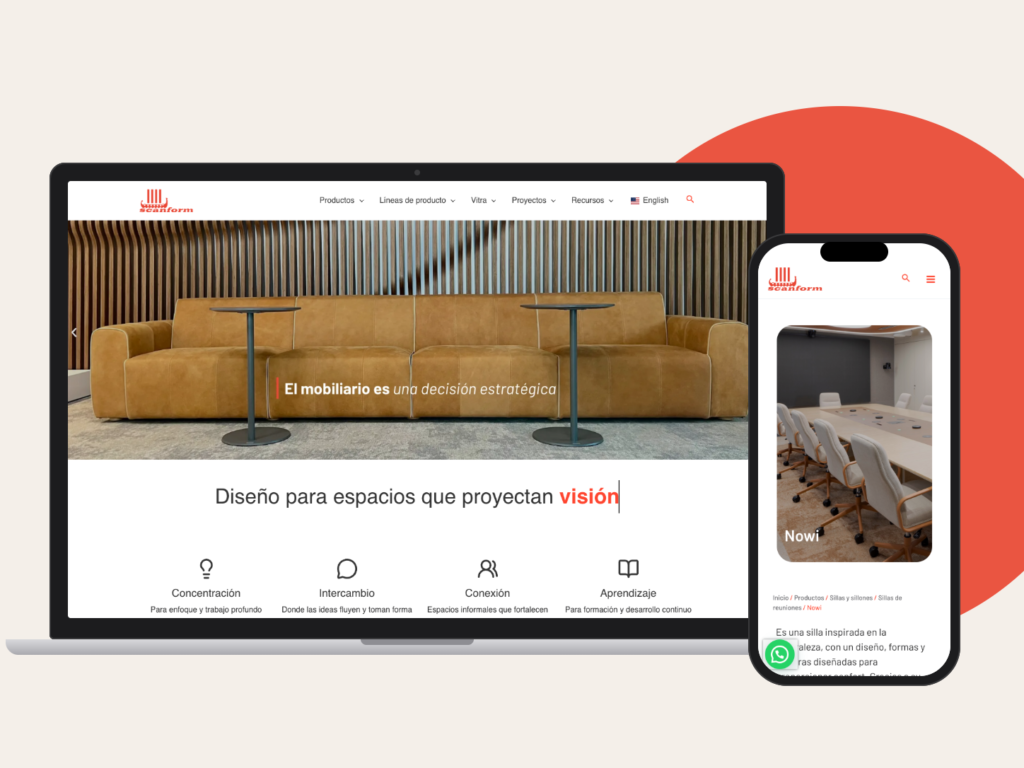
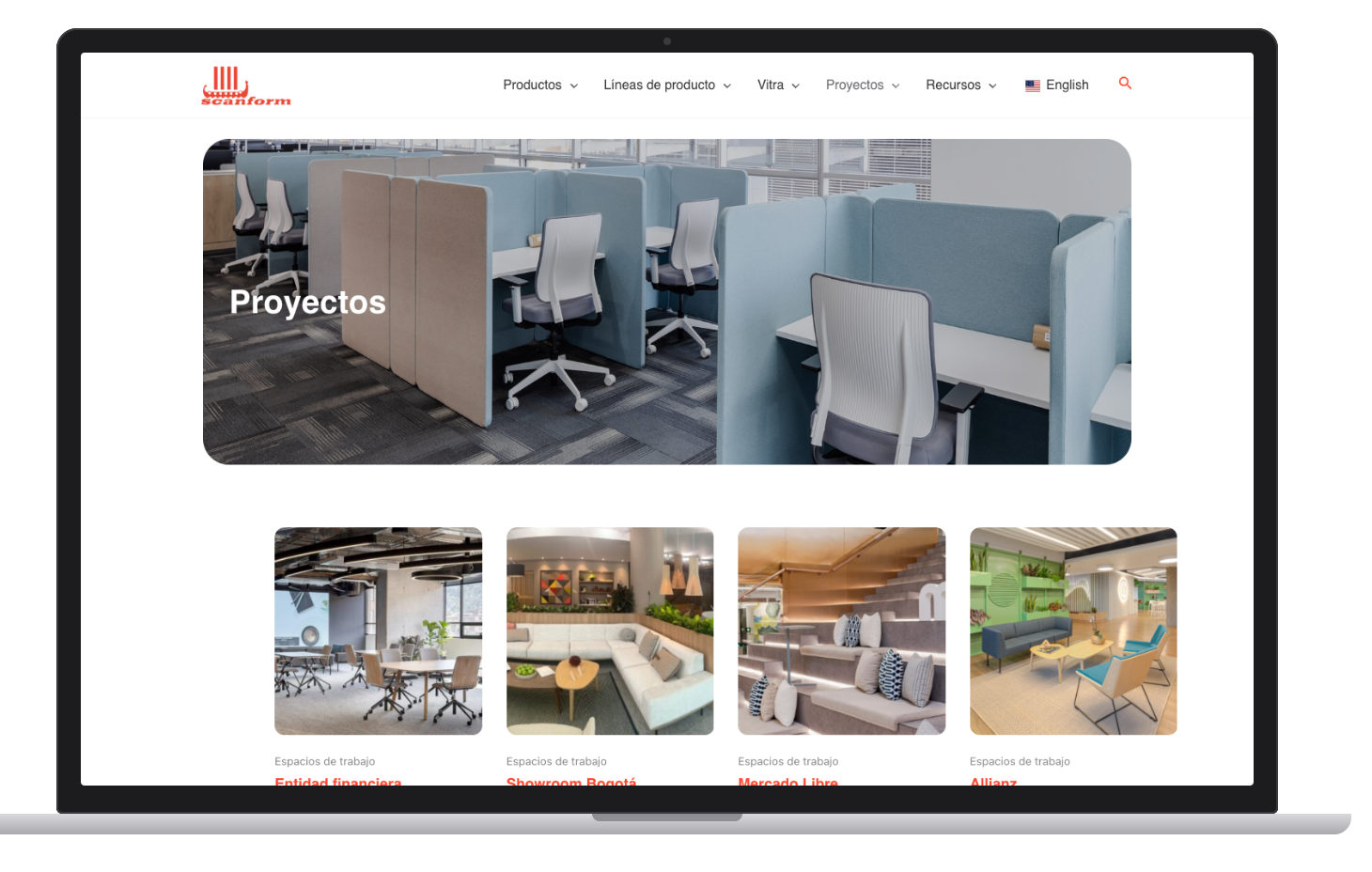
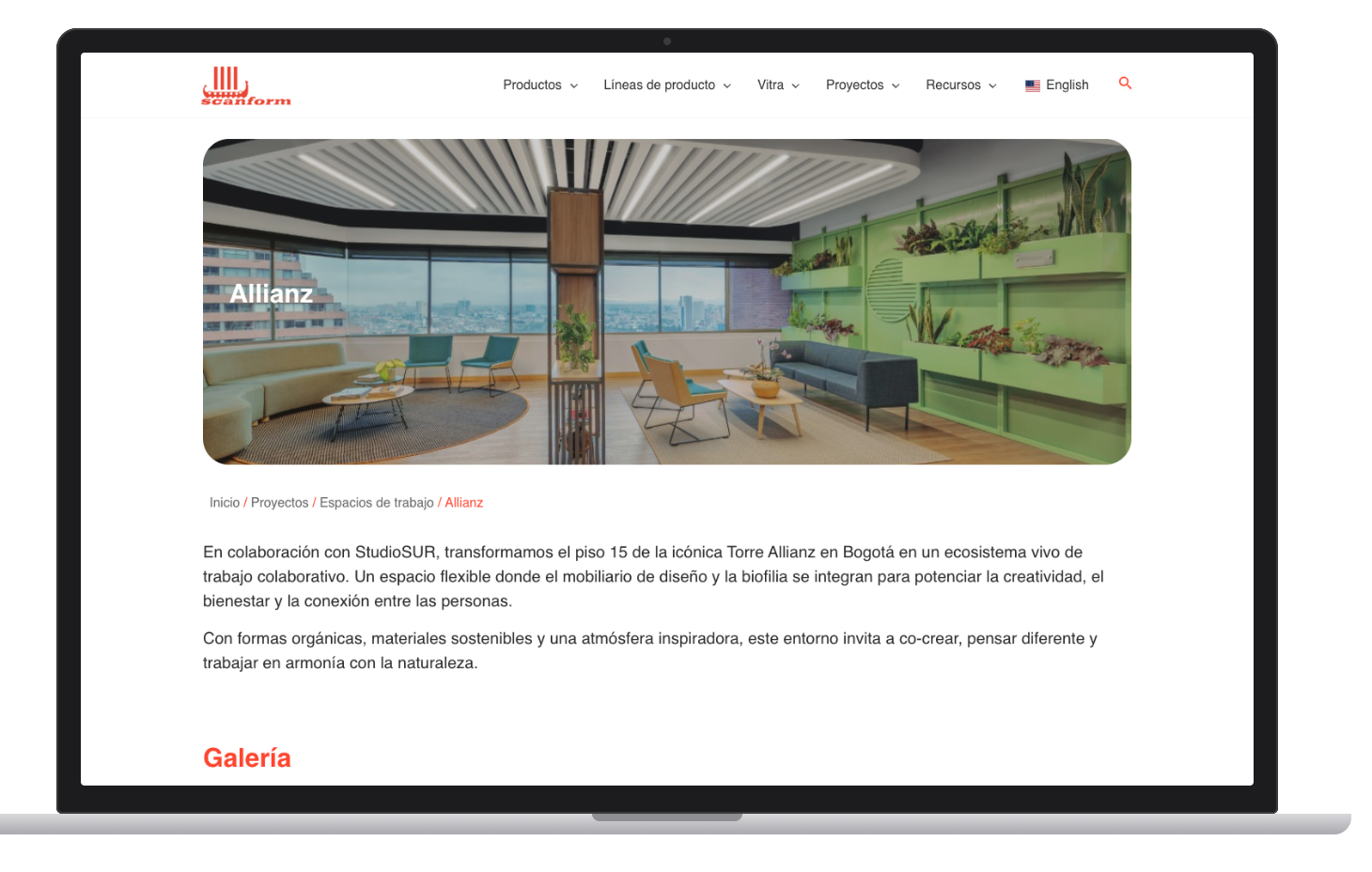
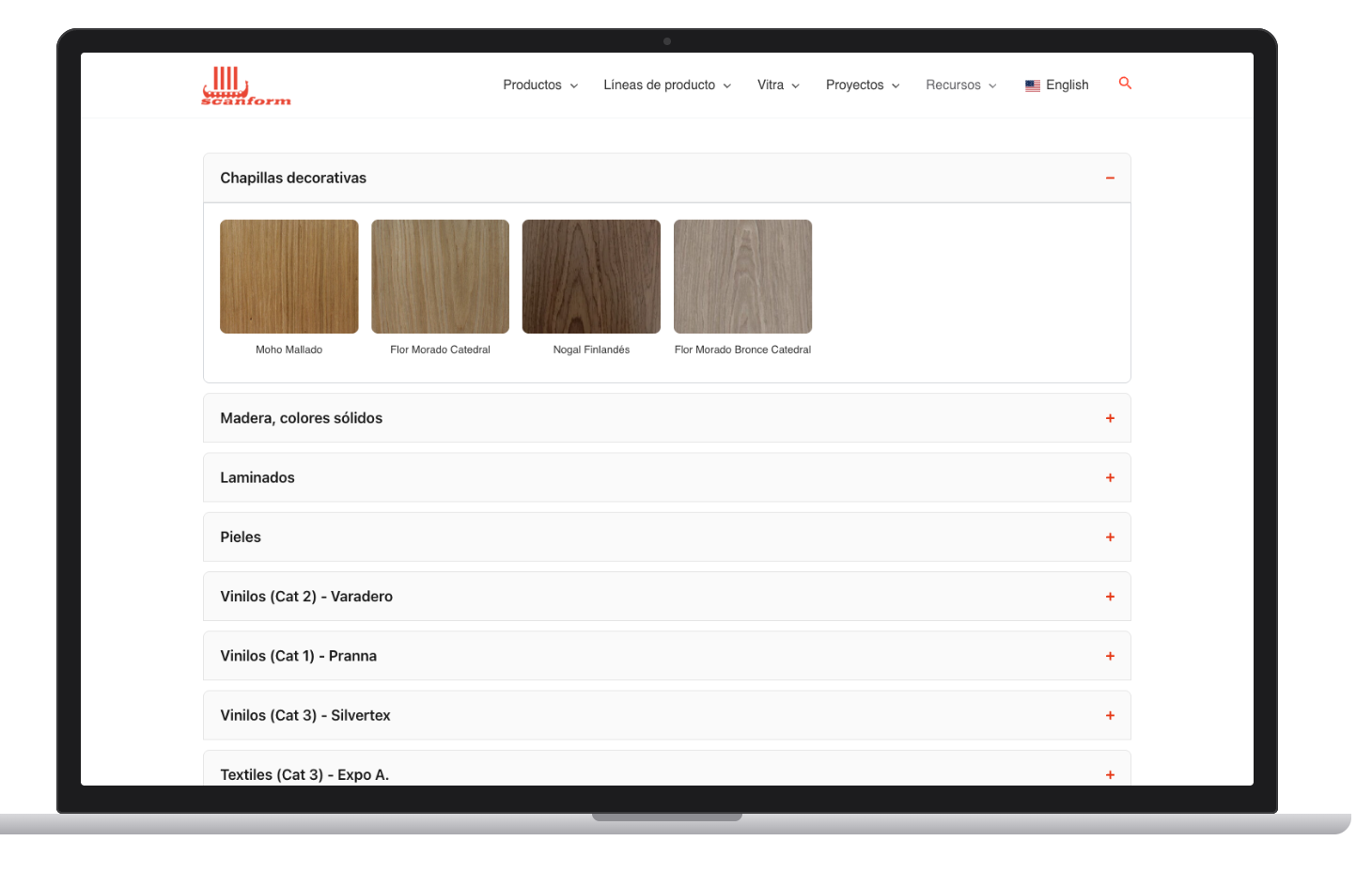
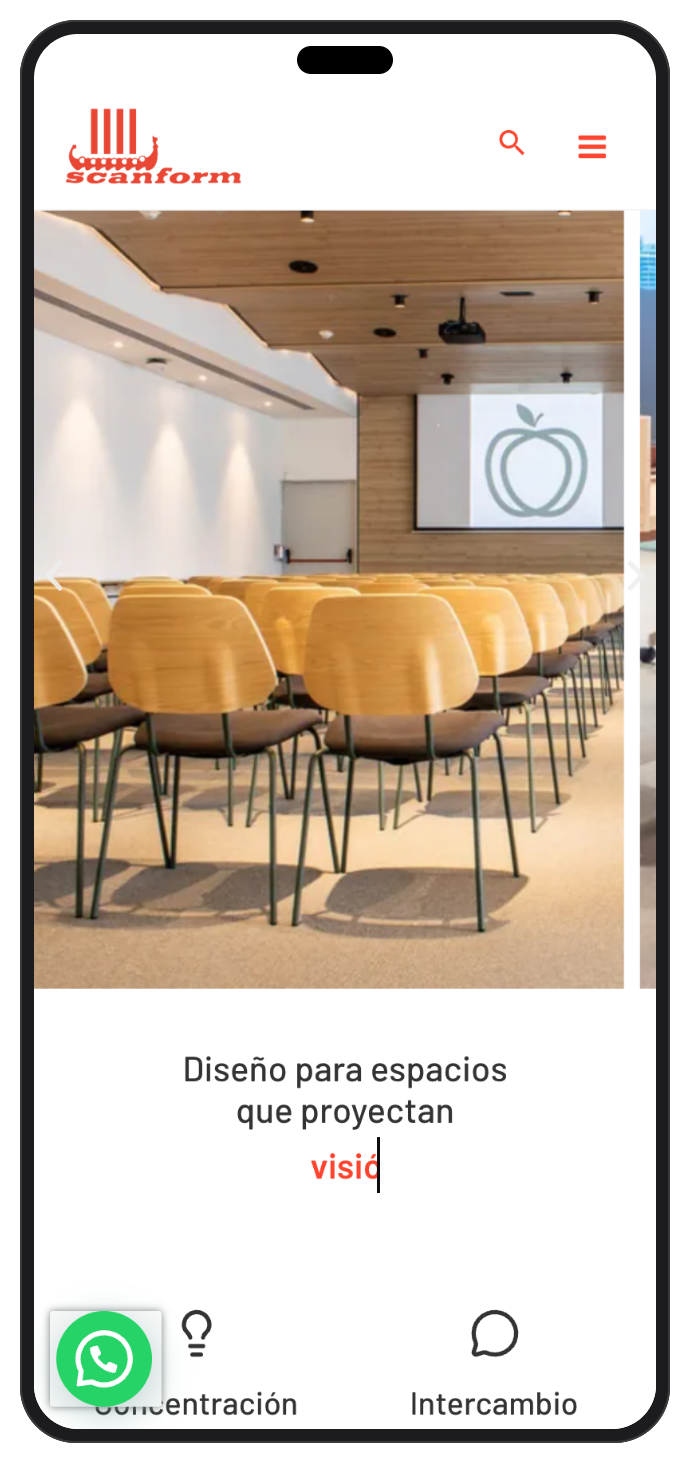
Scanform designs and manufactures corporate furniture in Colombia: chairs, desks, tables, and solutions for offices, healthcare, education, and hospitality, with showrooms in Bogotá and Medellín. Its website went through a full redesign: the catalog moved from static pages to WooCommerce used as a catalog, with more than 300 product and project pages and no prices, built so every client reaches out for advice.
🖌️ Figma
🖥️ WordPress
🏗️ Elementor
🛒 WooCommerce
🔎 Yoast SEO
Project type
Web design and development
Role
Design, WordPress development, and SEO
Outcome
Live at scanform.com.co, in Spanish and English.
312 products with search titles and descriptions, and 13 permanent (301) redirects from the old site.
About 60 images converted to WebP: nearly 100 MB lighter, and the home page hero went from 2,740 KB to 127 KB.
The challenge
Redesign the Scanform website. The old site had a lot of products, but each one was a static page: every change had to be made by hand, page by page, and the catalog was hard to maintain and organize. The constraints:
A wide range (furniture, chairs, tables, coat racks, and more), with product lines and brands, including Vitra.
Content to migrate from the old site: products, projects, materials, and banners.
Old URLs that Google kept showing, some with English titles from the previous site.
A catalog with no prices, built so clients reach out for advice.
Goal
Move from static pages to a catalog that’s easy to manage, with a single template for every product page.
A catalog that’s easy to browse by category, product line, and project type.
Migrate the content without losing search rankings.
A fast, well-indexed site after launch.
My role
I handled the project end to end:
Design: the new site’s design and navigation.
Development: built in WordPress with Elementor, using WooCommerce as a catalog.
Content: migration and bulk upload of products, projects, materials, and banners from the old site.
Technical SEO: post-launch audit and optimization.
Key decisions
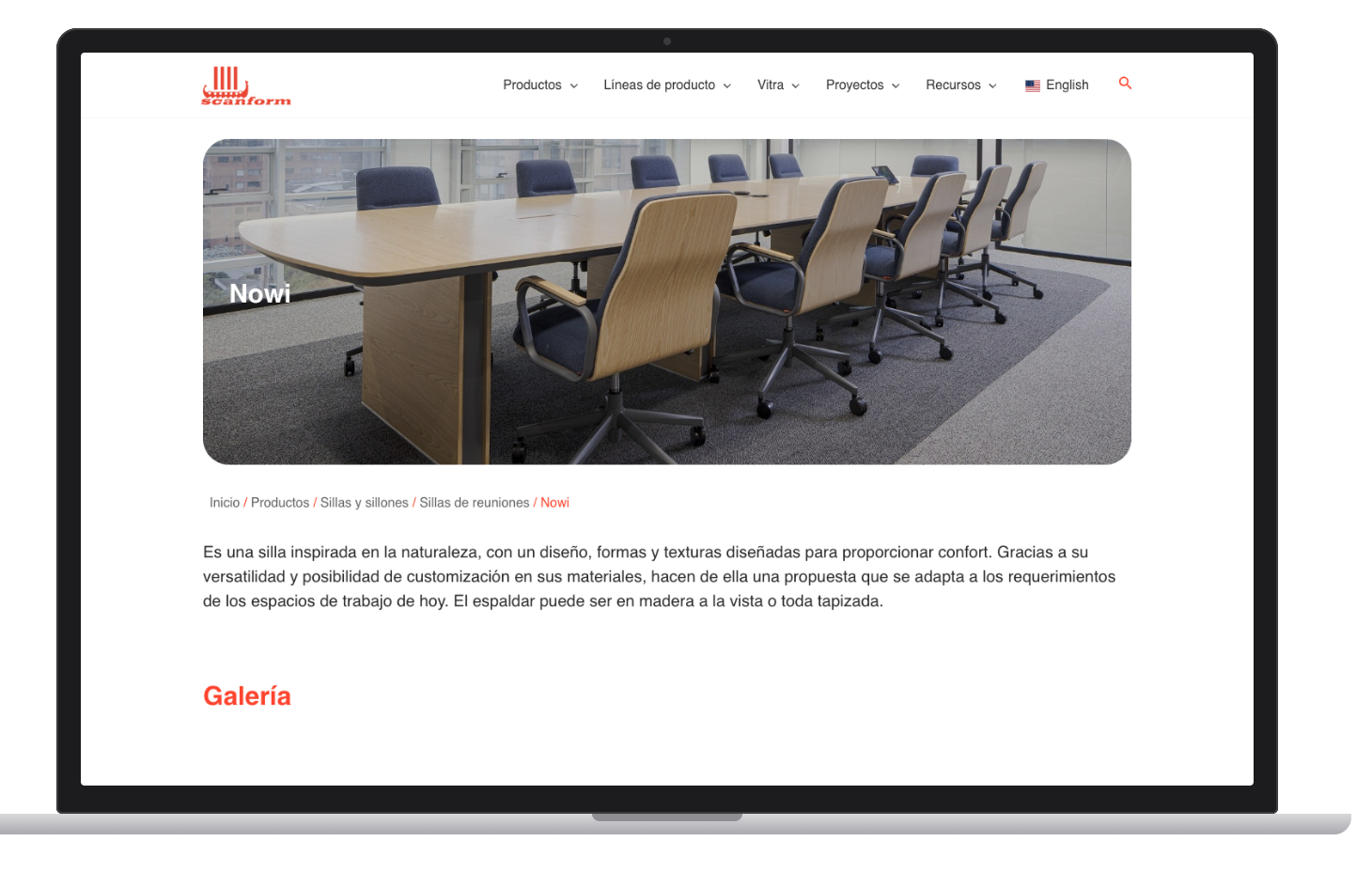
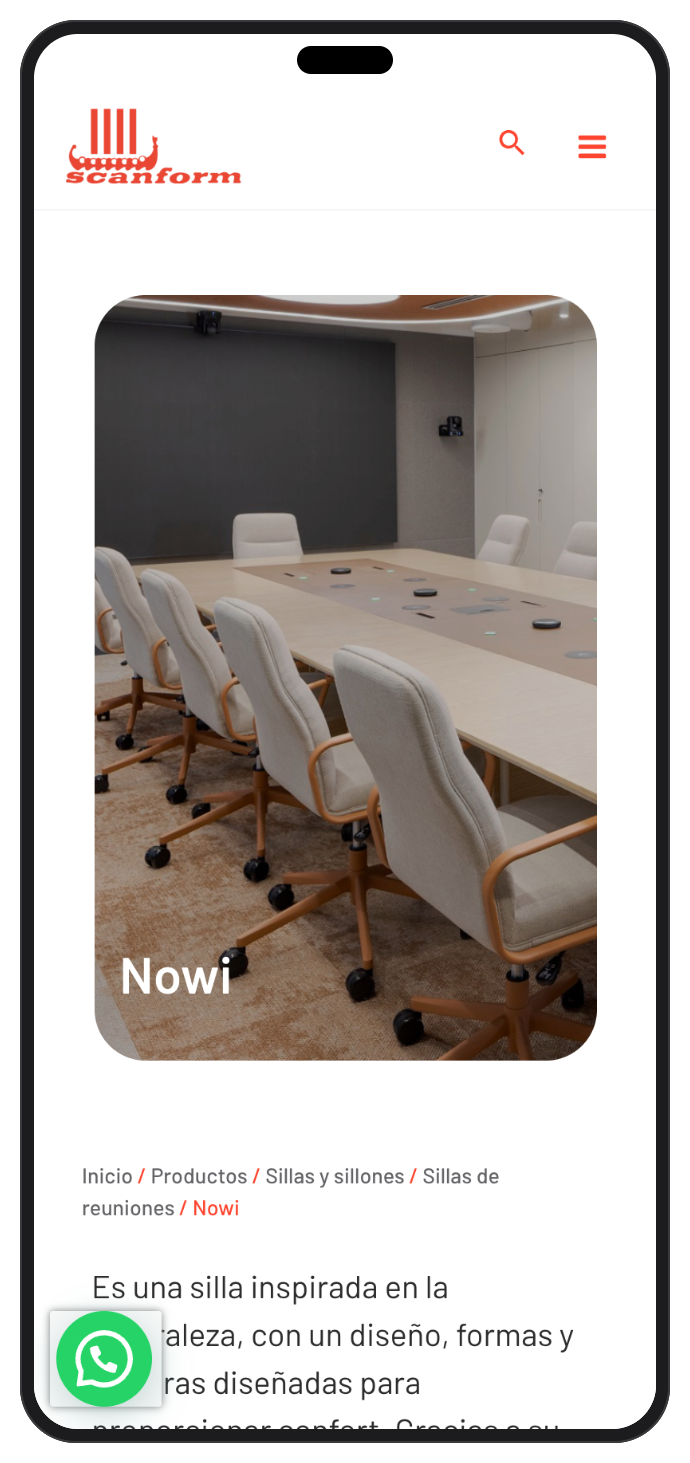
WooCommerce as a catalog, not a store: instead of a static page per product, each piece is a WooCommerce product with no price or cart, and the whole range (furniture, chairs, tables, coat racks, and more) uses the same template.
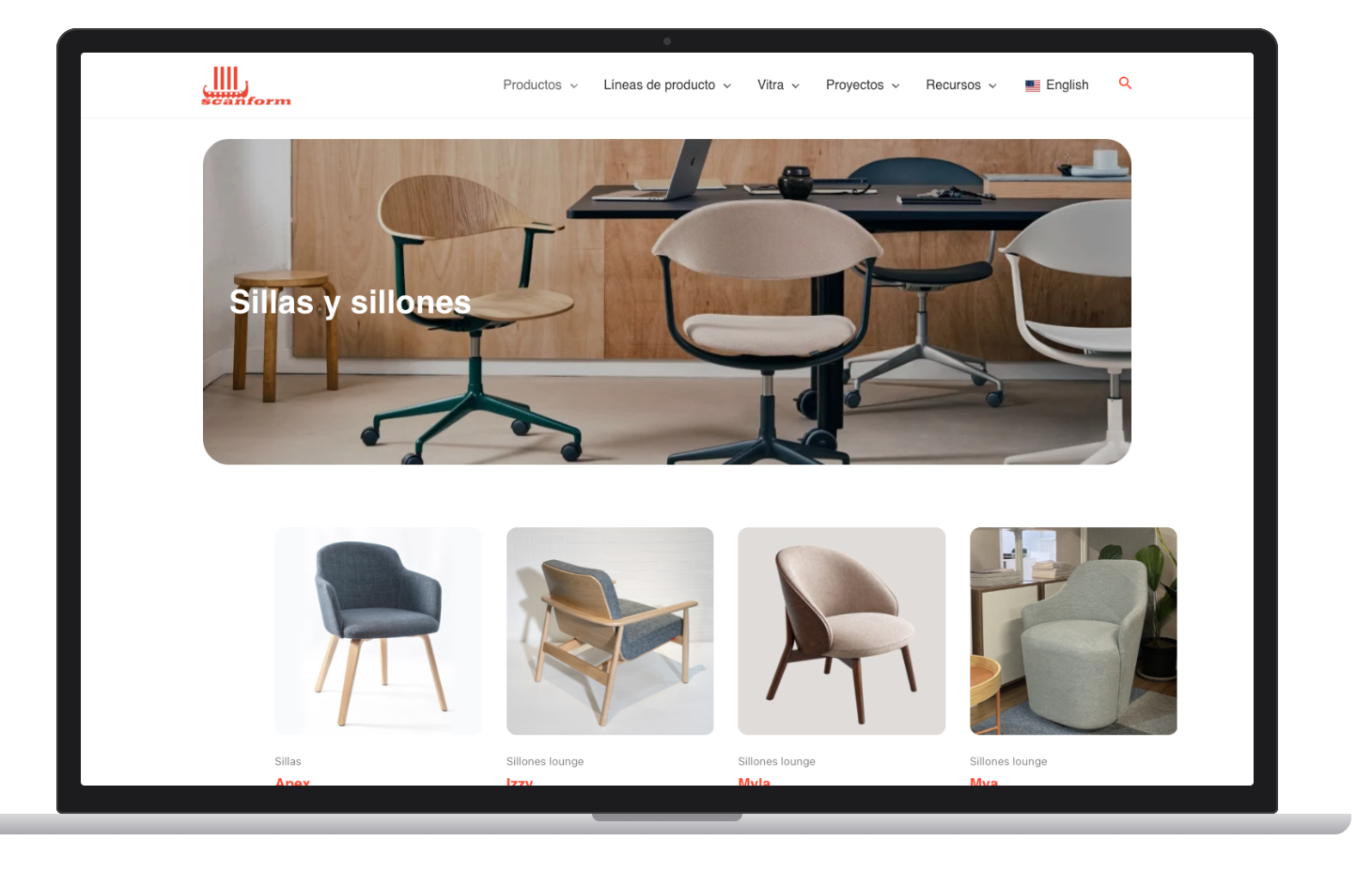
Categories, taxonomies, and tags: the range is organized by category, product line, and type of space, so adding a product or moving it to another category doesn’t require touching the design.
Navigation that matches how clients think: menus by product type, product line, the Vitra brand, and projects by type of space (workspaces, meeting rooms, healthcare, waiting areas, hospitality, home, learning, and auditoriums).
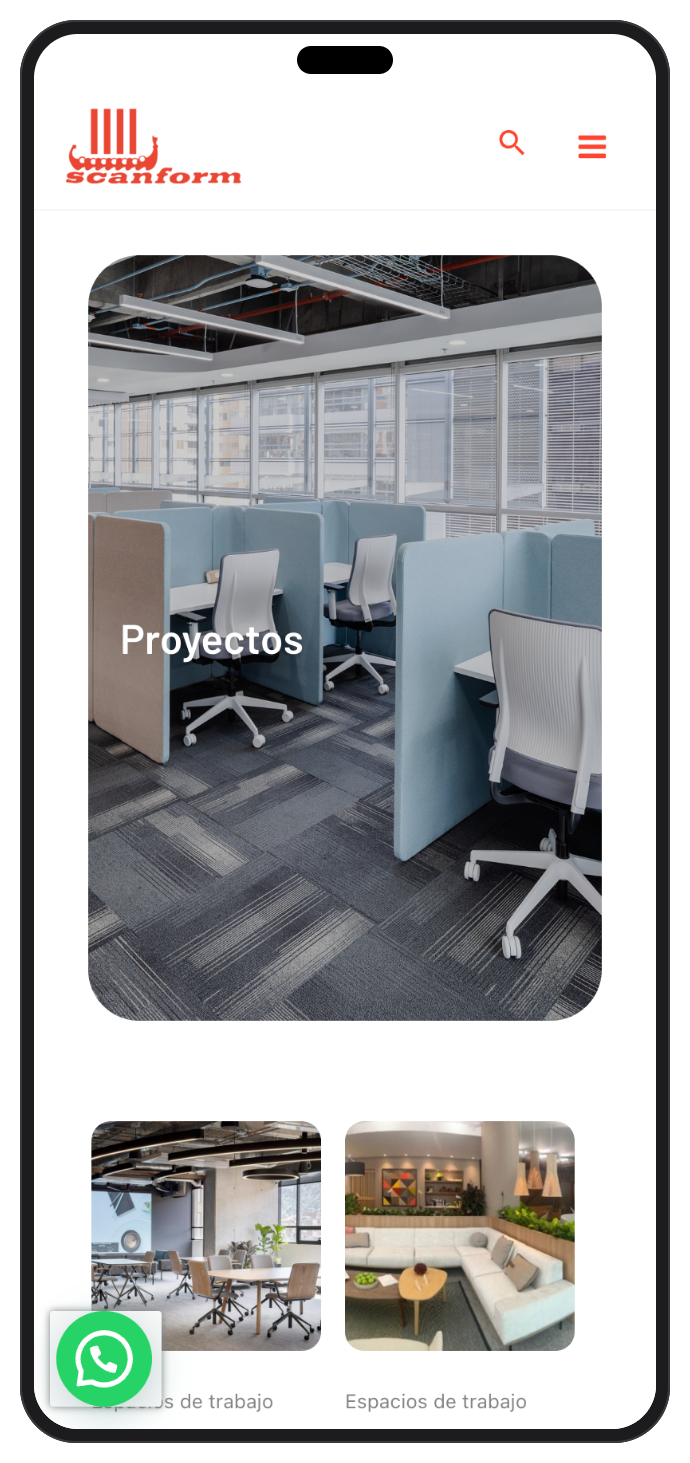
Projects as proof: each project uses the same catalog structure, with its own page of photos and a description, grouped by type of space.
Automated migration: bulk CSV uploads and scripts to bring over materials and banners from the old site.
SEO from launch day: redirects for old URLs, Spanish metadata across the whole catalog, and cleanup of pages that shouldn’t be indexed.
Solution
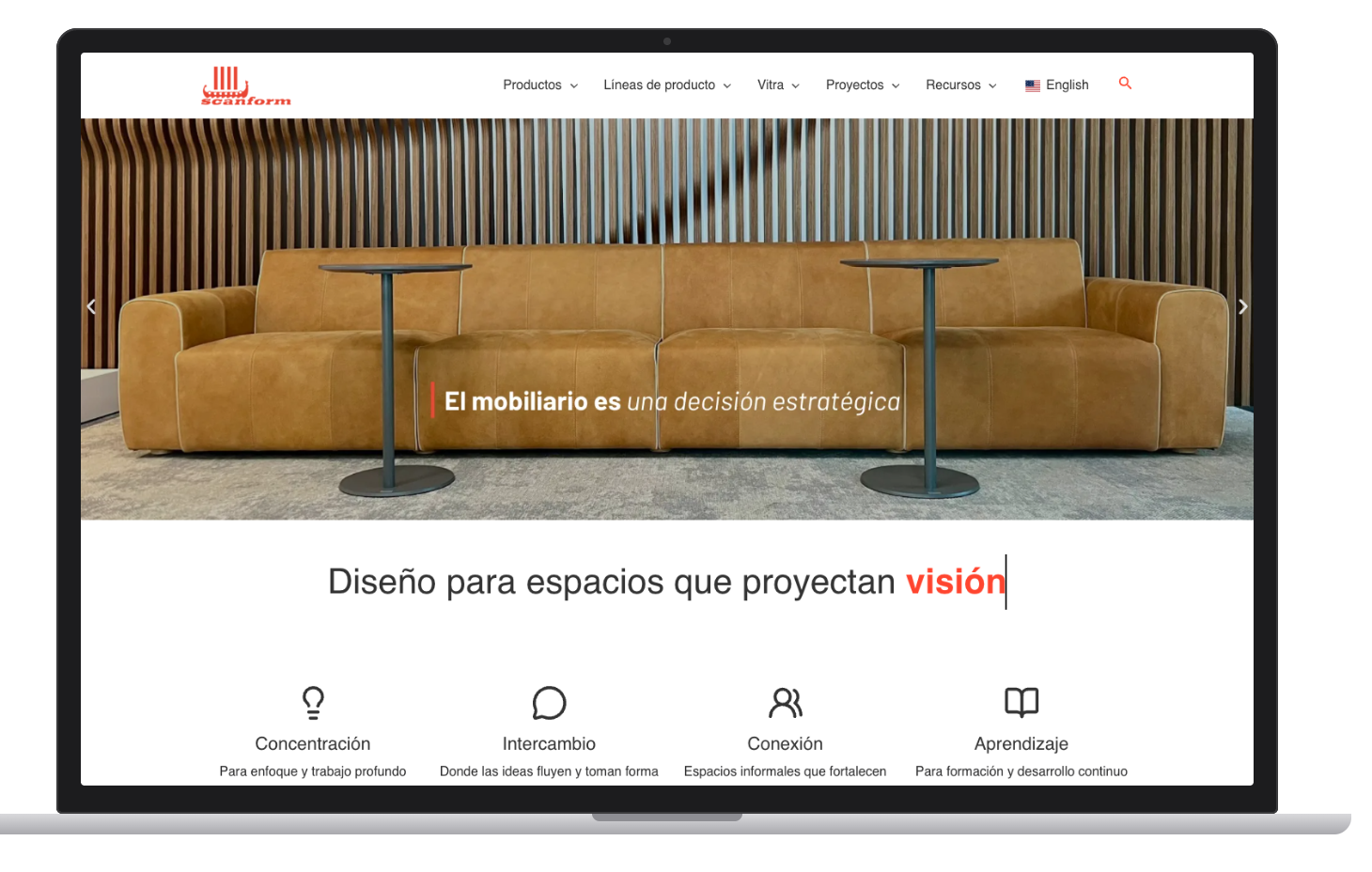
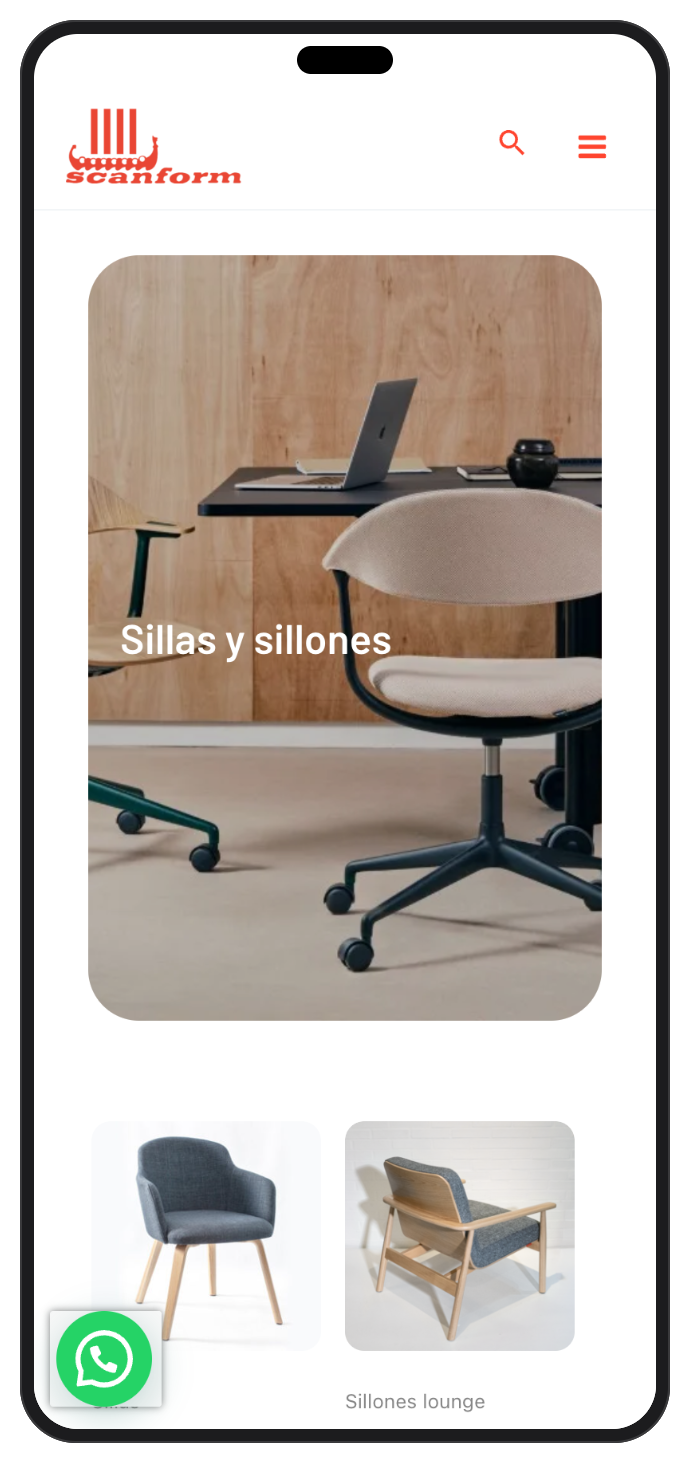
Home: showroom image carousel, shortcuts by type of use (focus, exchange, connection, and learning), categories, featured products, and projects.
Catalog: product pages generated from WooCommerce with a single template, organized into categories with submenus.
Projects: organized by type of space, each with its own page.
Resources: PDF catalogs, materials by finish, videos, a maintenance manual, and warranties.
Contact: contact and newsletter forms, plus a WhatsApp button.
Languages: Spanish and English versions.
Results
The site is live at scanform.com.co, in Spanish and English.
The whole catalog shares one template: a new product or a category change is done from the admin panel, without designing pages.
312 products now have search titles and descriptions, along with the main pages and 16 categories.
13 permanent (301) redirects send old-site URLs to their new pages.
About 60 heavy images were converted to WebP: nearly 100 MB lighter overall, and the home page hero dropped from 2,740 KB to 127 KB.
Lessons learned
WooCommerce isn’t just for selling: used as a catalog, its categories, taxonomies, and templates make hundreds of product pages easy to maintain.
A redesign is also a migration: without redirects and metadata, Google keeps showing the old site.
Performance is won in the images: a few unoptimized photos can outweigh all of the site’s code.
Key screens
Home page, product category, product page, projects, project page, and materials.
Responsive
On mobile: home page, product category, product page, and projects.