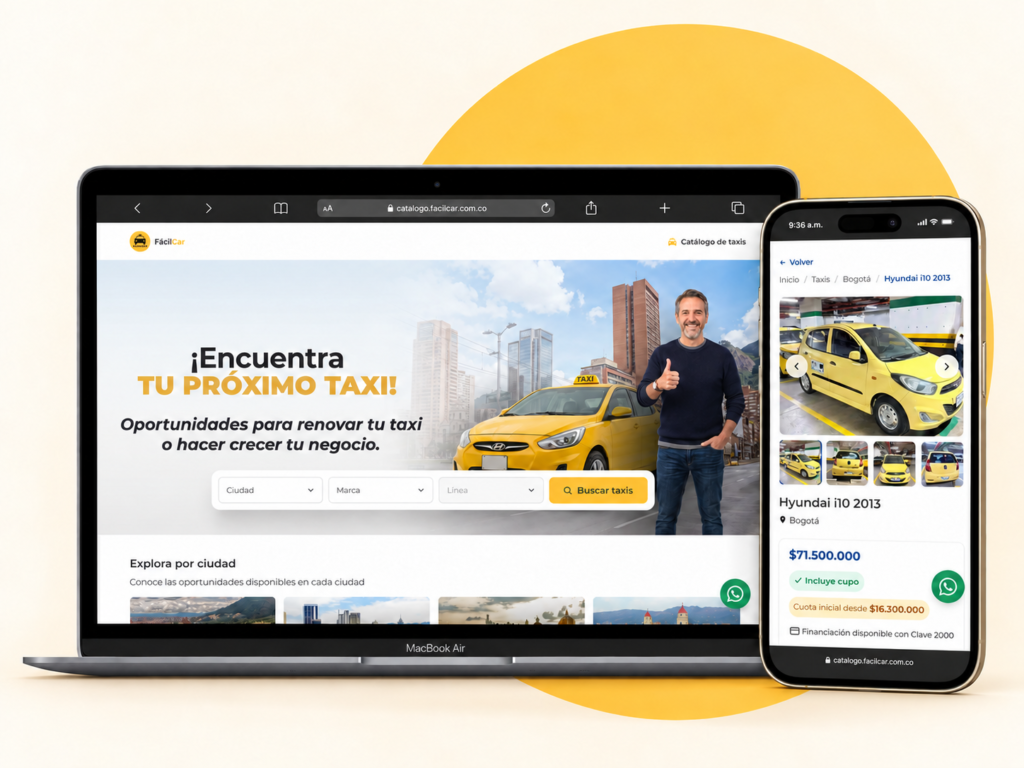
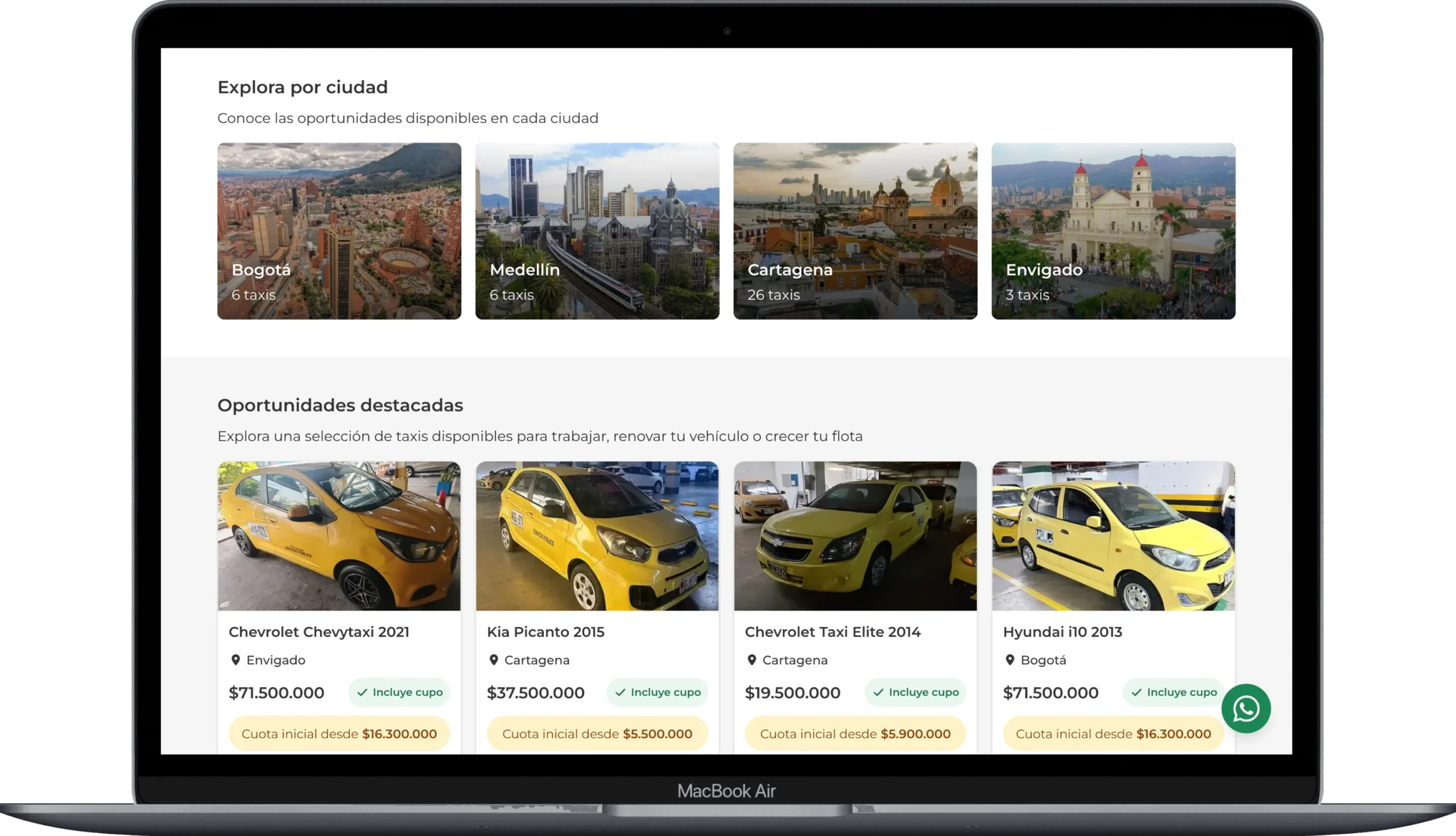
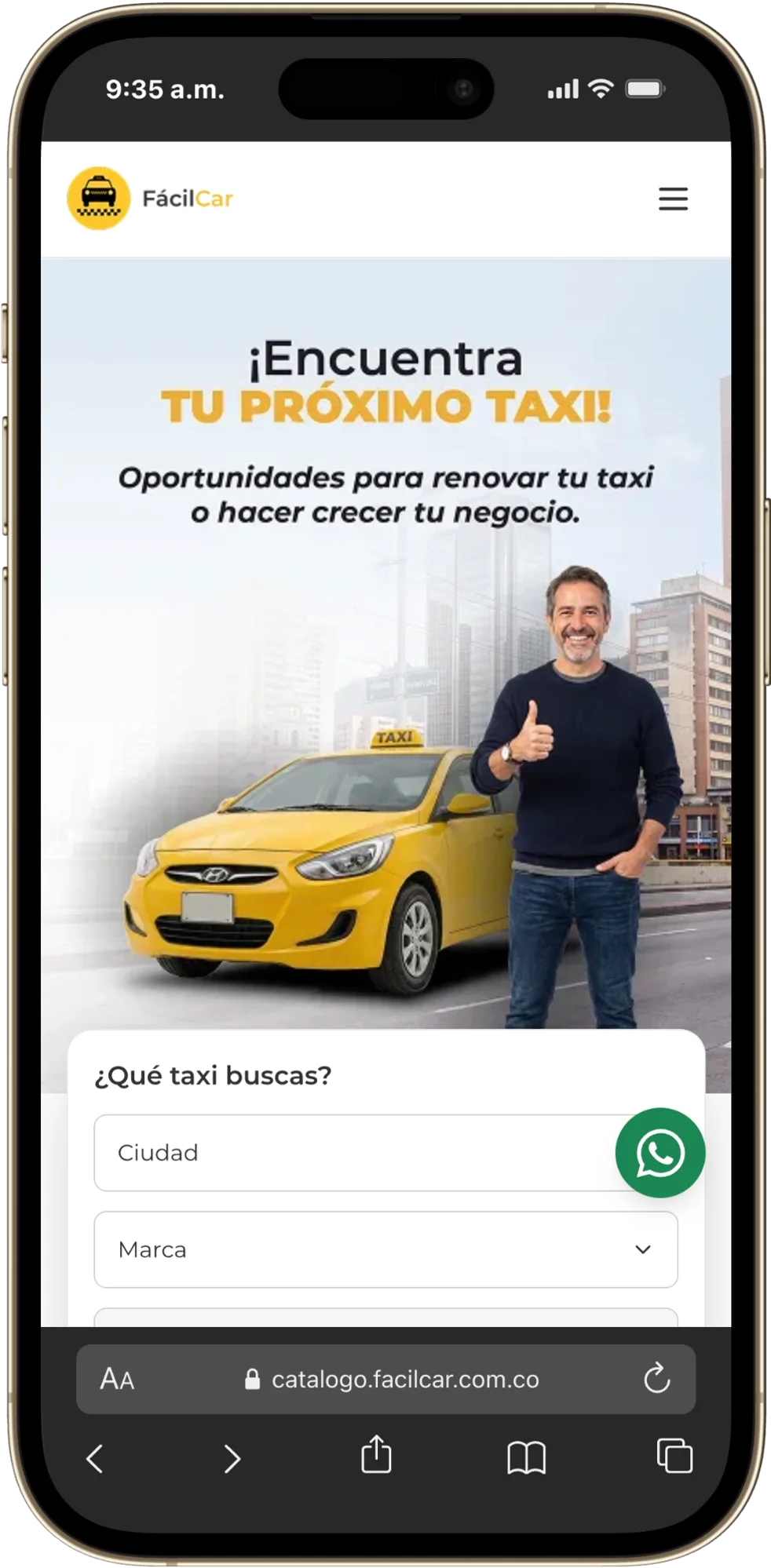
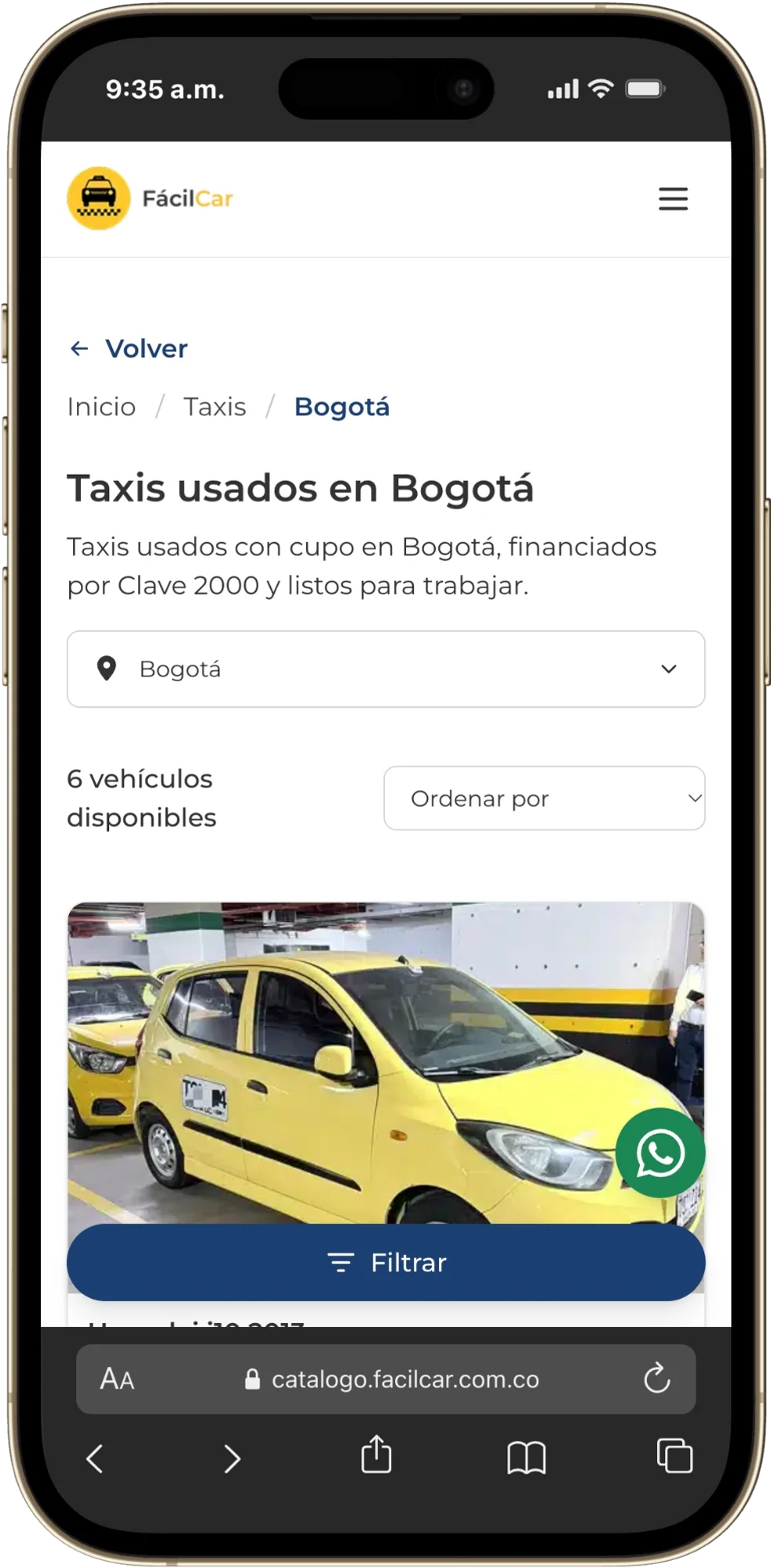
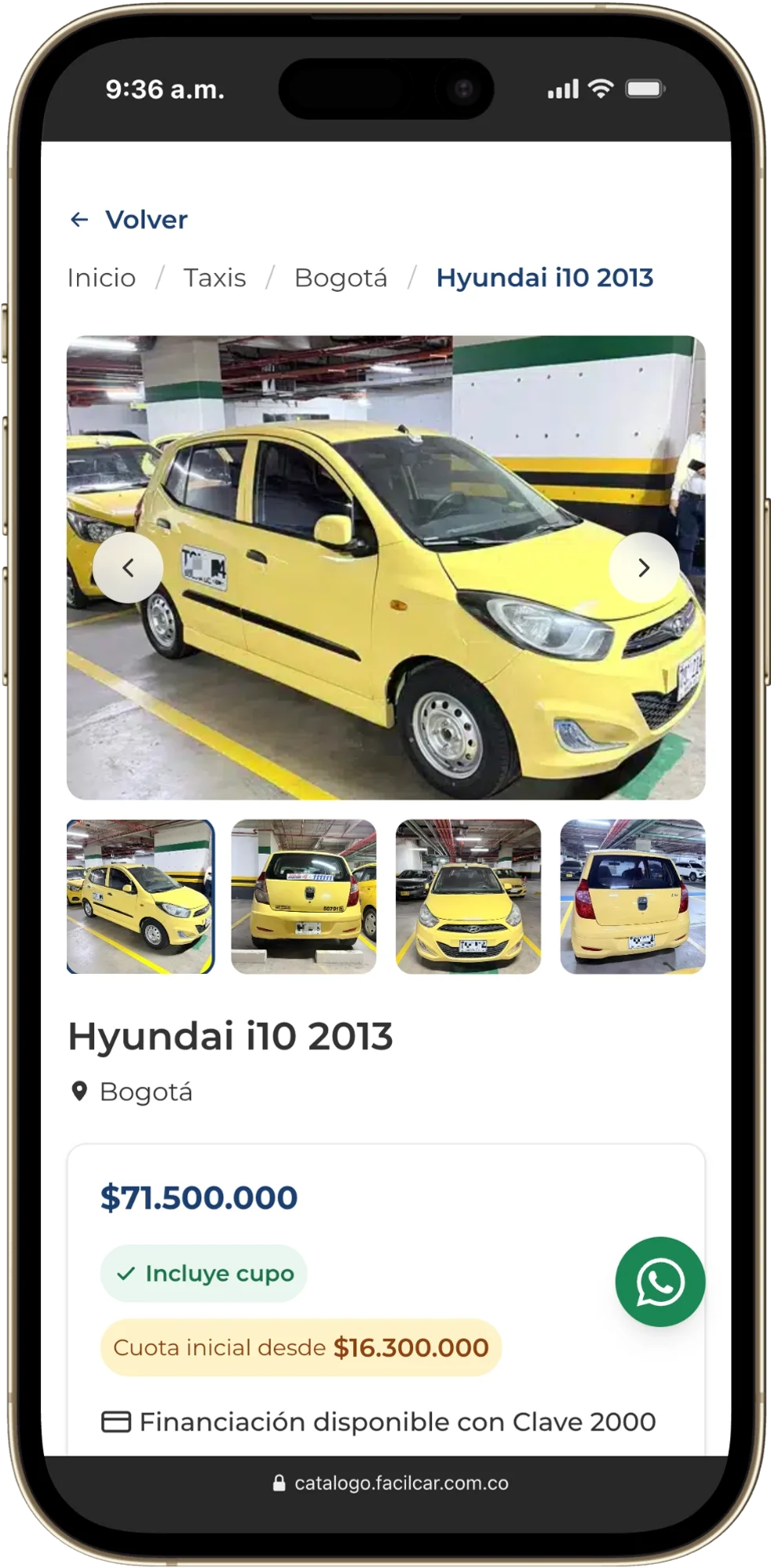
FácilCar is the catalog of used taxis with operating permits, financed by Clave Financiera, the brand that replaced Clave 2000 after its rebrand. It isn’t an e-commerce site: every screen is designed so people contact an advisor on WhatsApp or leave their details in a form that goes straight to the CRM.
🖌️ Figma
🖥️ WordPress headless
🏗️ Astro
⌨️ TypeScript
🎨 Tailwind CSS
✅ Zod
📊 Google Tag Manager
Project type
Web design and development
Role
UX/UI, front-end development, CMS, and integrations
Outcome
Live at catalogo.facilcar.com.co.
56 pages generated from the inventory and 41 permanent (301) redirects that preserve search rankings.
CRM integration verified end to end with a real lead.
The challenge
Replace a catalog that was already working without losing traffic, leads, or rankings. It wasn’t a blank canvas:
URLs were already indexed and shared on WhatsApp, so they couldn’t break.
Google Ads and Search Console pointed to a specific www domain.
Clave Financiera’s lead-capture CRM had to keep working exactly the same way.
The inventory changes constantly, and many vehicles have no photos.
Goal
A modern, fast, SEO-ready catalog that replaced the old one without losing authority.
A mobile-first experience — where most of the traffic comes from — focused on contacting an advisor.
A maintainable architecture that separates content management from presentation.
Keep and improve the CRM and analytics integrations.
My role
I worked on the project end to end:
UX/UI: experience and screens for the home page, catalog, vehicle page, and their states.
Front-end: component architecture and full development in Astro, TypeScript, and Tailwind CSS.
CMS: administering WordPress as the backend and building custom REST API fields for the front end.
Integrations: a form connected to the CRM, plus tracking with Google Tag Manager, GA4, and Google Ads.
SEO and launch: metadata, structured data, 301 redirects, deployment, and technical documentation.
Key decisions
Headless WordPress + Astro: content was already managed in WordPress; decoupling it from the front end made it possible to ship a static, fast, indexable site with no application server to maintain.
Data validation with Zod: with inventory that changes every day, publishing stops if a vehicle arrives with invalid data. Not publishing beats publishing something broken.
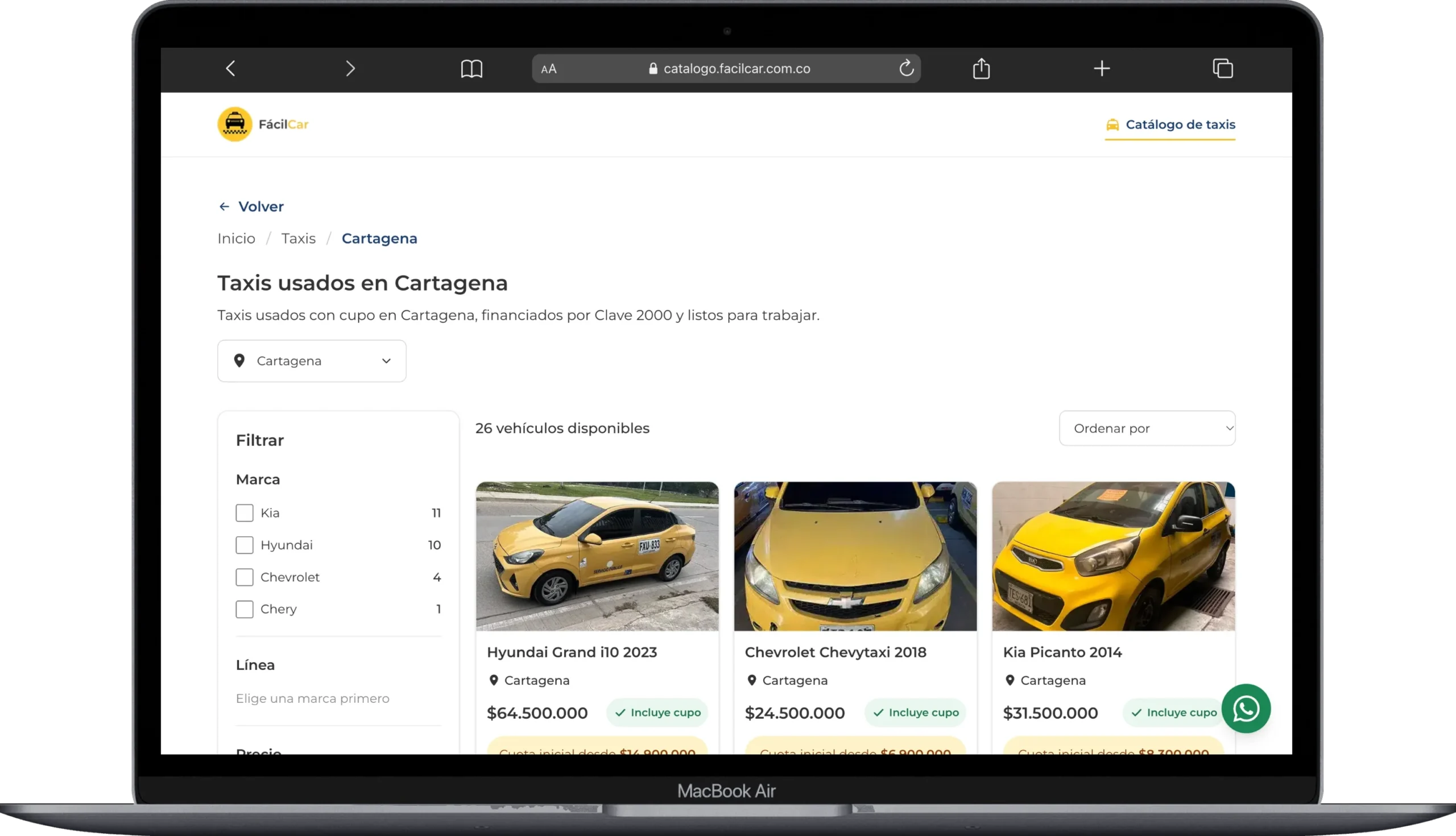
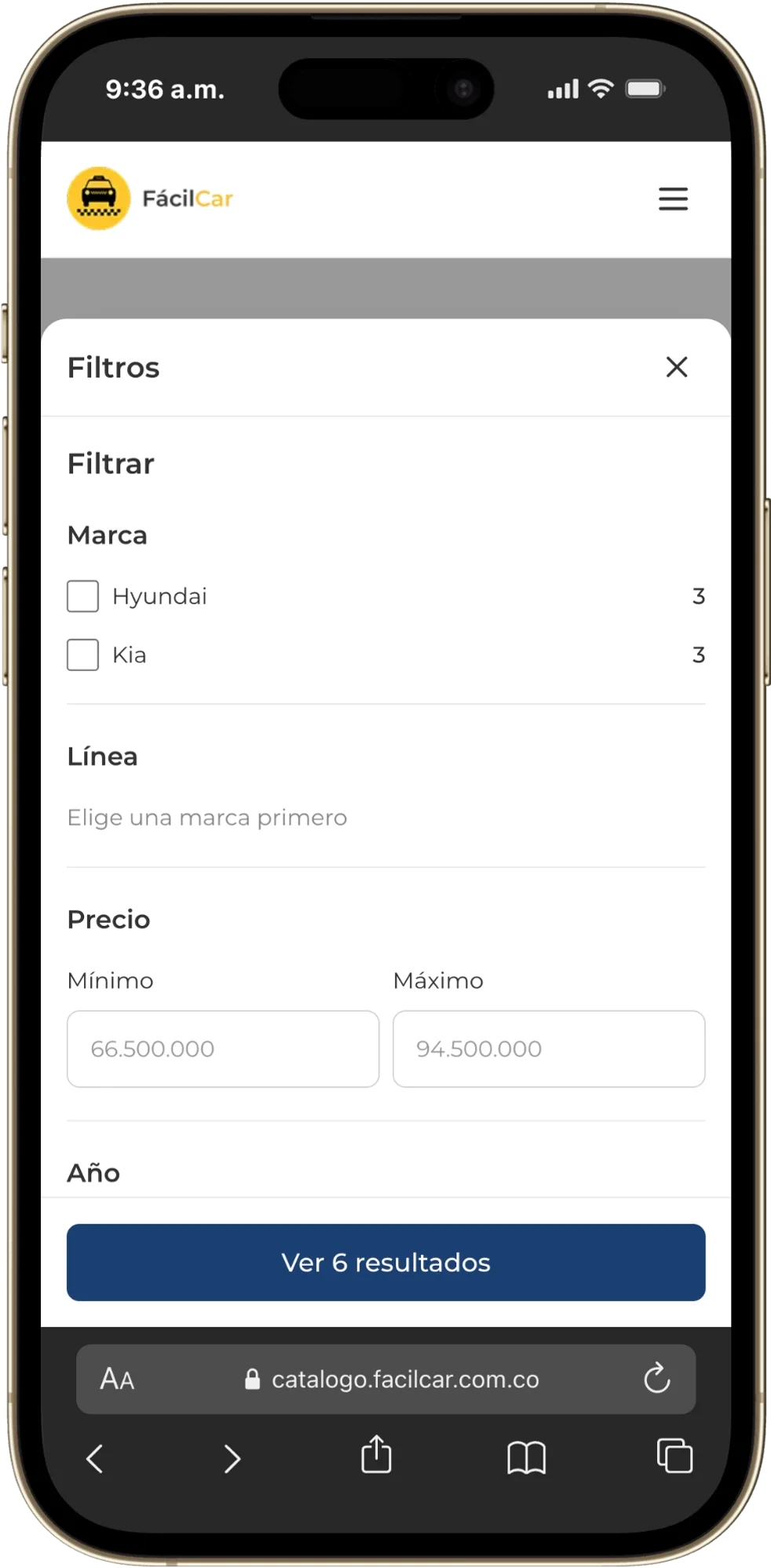
Bottom-sheet filters on mobile: the same filters work as a sidebar on desktop and a bottom sheet on mobile, with their state saved in the URL so searches can be shared.
License plate in the URL: many taxis share the same brand, line, year, and city; the license plate guarantees a unique, stable address for every vehicle page.
No photos, no generic image: when a vehicle has no photos, the spec sheet takes the gallery’s place, and on mobile the price and contact options move to the top.
Solution
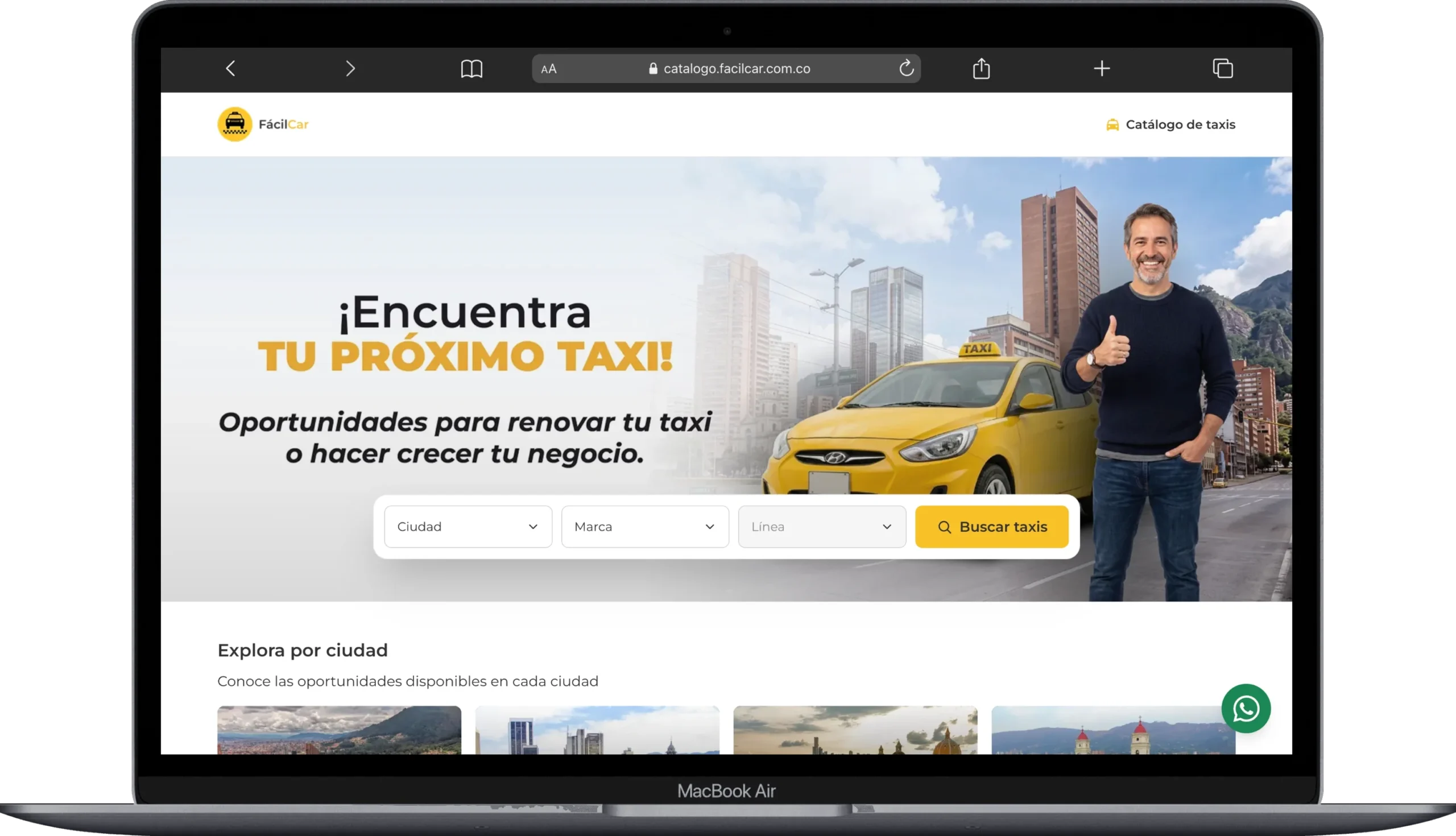
Home: search by city, brand, and line, plus browsing by city and featured listings.
Catalog: filters by brand, line, price, and year, result sorting, and searches saved in the URL.
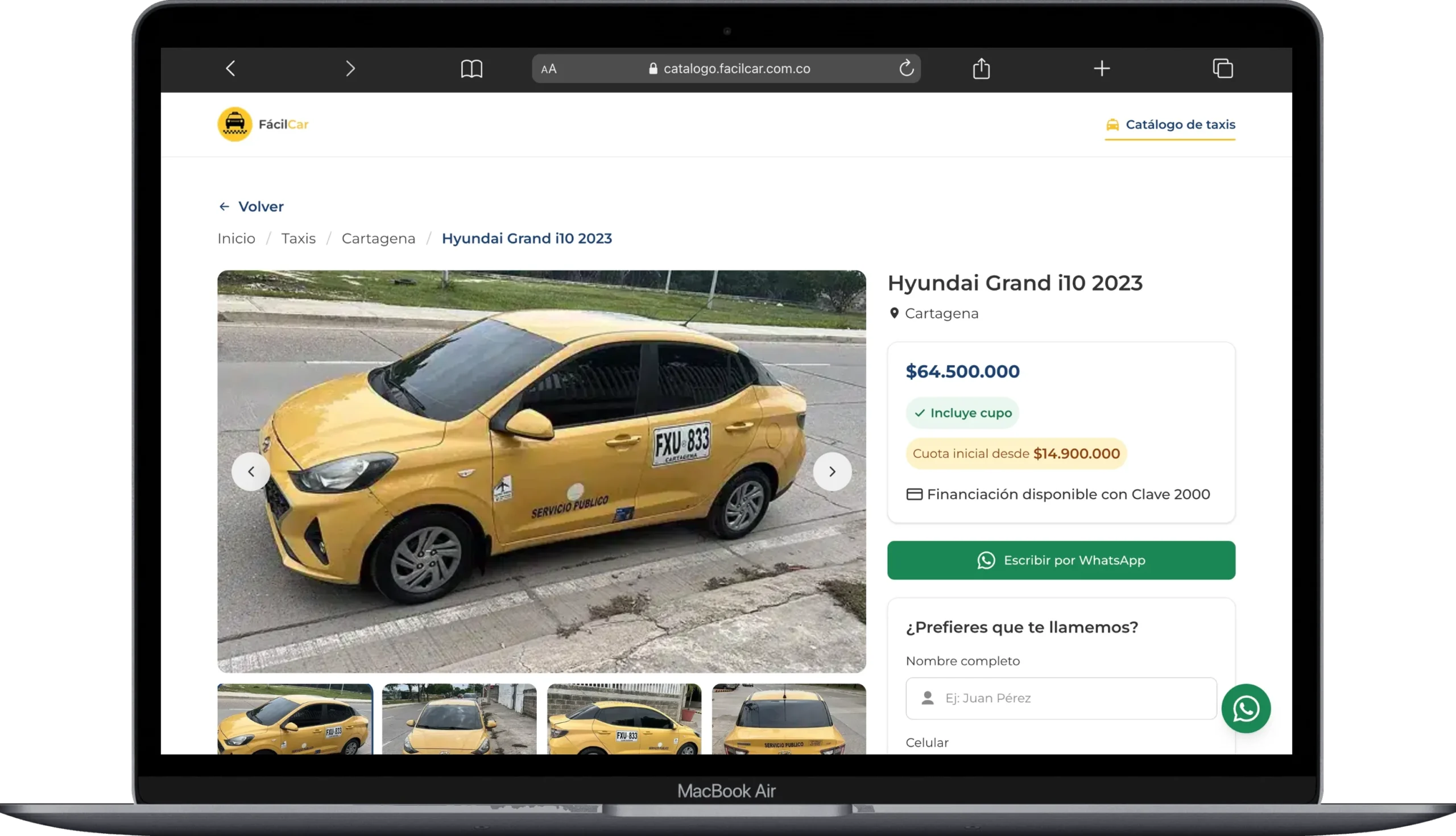
Vehicle page: gallery, price, down payment, WhatsApp contact, a contact form, and similar vehicles, with states for sold and no-photo listings.
Internal tools: license plate search for the team and a 404 page that leads back to the catalog.